
Classification, Storage, and Maintenance of Lifeboats
Release time:
2024-12-04
Author:
Source:
Abstract
The rigid liferaft is a traditional rescue tool. It uses air chambers made of galvanized iron sheets, aluminum alloy plates, stainless steel plates, or hard plastics as buoyancy components, covered with flame-retardant materials; the top of the raft is equipped with a fixed rigid canopy and entrances, and the bottom is made of wooden lattice boards. It is usually stored fixedly on the ship's side slide or the bridge deck, and is deployed by using a slide hook or a liferaft frame.
The rigid liferaft has a simple structure and low cost, but it is large, heavy, and has a low capacity.
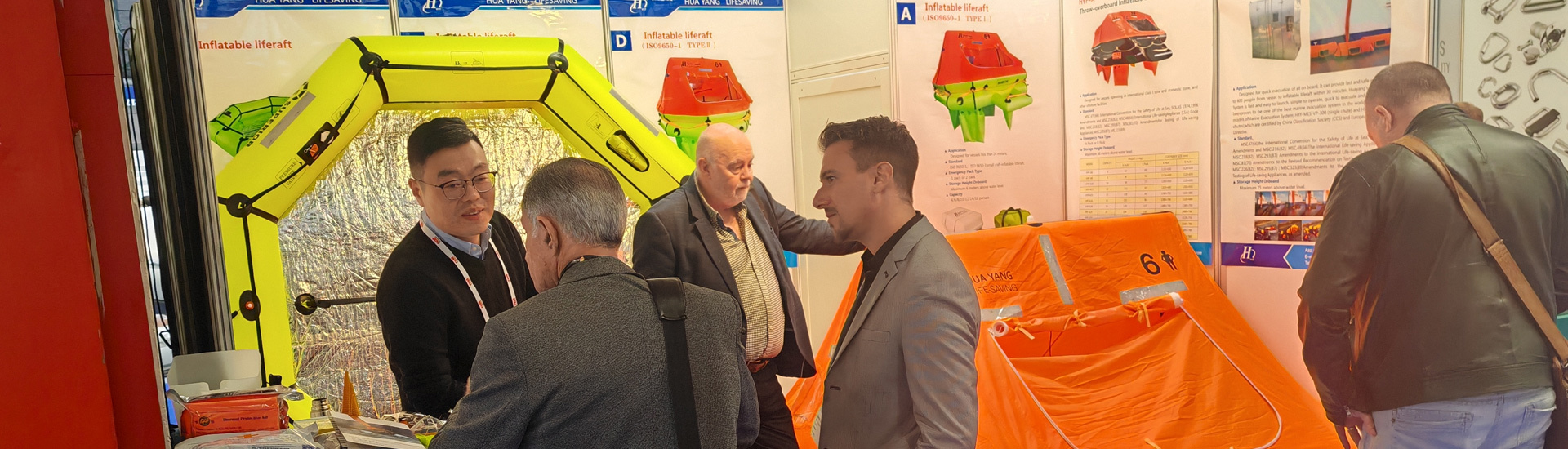
Inflatable liferafts include inflatable liferafts, inflatable life buoys, and inflatable self-righting liferafts.
The inflatable liferaft consists of rubber floats and a double-layer waterproof nylon canopy, stored in a fiberglass tube when folded. It has an advanced design, compact structure, high safety, easy operation, and quick formation, widely used in civilian and military vessels.
The deployment methods of inflatable liferafts include mechanical hoisting and throwing. The mechanical hoisting type is inflated before entering the water, while the throwing type may capsize during inflation and requires manual righting.
The inflatable life buoy does not have a canopy, and the bottom of the raft is set between the floats. It remains positively buoyant after inflation in any sea conditions, mainly equipped on passenger ships.
The inflatable self-righting liferaft has a rounded top that can self-right when capsized on the sea surface, meeting the safety and quick response needs of personnel in maritime survival situations.
Performance requirements for inflatable liferafts include floating for 30 days in various sea conditions, normal use after being dropped from a height of 18m, withstanding a 4.5m height stomp without damage, not being damaged when towed in still water, equipped with an automatic canopy, accommodating no less than 6 people, and a total weight not exceeding 185kg.
Storage requirements for inflatable liferafts include not affecting the use of other lifesaving equipment, being as close to the water surface as possible, requiring 2 crew members to complete boarding and lowering within 5 minutes for suspended liferafts, and being stored in a safe and sheltered place to avoid damage.
Inspection and maintenance of liferafts include weekly visual inspections, monthly checks of quick-release hooks, fixed rigging, etc., with maintenance intervals not exceeding 12 months, requiring repairs at approved maintenance stations, a service life of 10 to 15 years for the raft body, self-replaceable static pressure release devices, unpainted surfaces, and clear and obvious markings and data.
The deployment methods of inflatable liferafts include throwing and mechanical hoisting. The throwing type relies on human power or gravity to throw into the sea, while the mechanical hoisting type requires first removing it from the liferaft frame, pulling the inflation rope to inflate and form it, and then securing the boarding platform for crew and passengers to board the liferaft from the deck.
Recommend Reading
2025-02-07
Classification, Storage, and Maintenance of Lifeboats
2024-12-04
2024-12-04